Sunday, March 15, 2009

Thursday, March 12, 2009

Sci Fi/Fantasy # 5

(Fantasy)
Author: Jessica Day George
Title: Dragon Slippers
Publisher: Bloomsbury Children’s Books Date: 2007

Age level: Elementary (3-4) Upper (5-6)

Summary:
Creel’s family was very poor, and needed some way to make money. Her Aunt decided that she would feed Creel to a dragon in hopes that a noble Prince would try and rescue her, and then they would be married. It turns out that Creel is not a damsel in distress, but in charge of her own fate. She talks her way out of being eaten by the dragon, but now she must save her town from the dragon wars…

Strengths:
This is a great story of empowerment for women. Creel does not ever rely on the men who try and save her, although she accepts help from them when she needs it. Throughout the story she is portrayed as a brave, intelligent girl. She also has the gift of being able to talk to dragons and help them see her way. The story is very entertaining, and keeps you guessing. The language is simple enough for younger elementary (3-4) but the storyline is appropriate all the way to upper elementary. It is a truly entertaining book.

Concerns:
I wish the book had a few pictures to illustrate some of the action. There is so much that happens that I feel there is the potential to have great pictures accompanying some of the scenes.

Classroom use/Other comments:
This would be a great book for free reading time, or for a child to use for a book report. It is entertaining and definitely a great fantasy read.

Biographies/Informational Books # 5


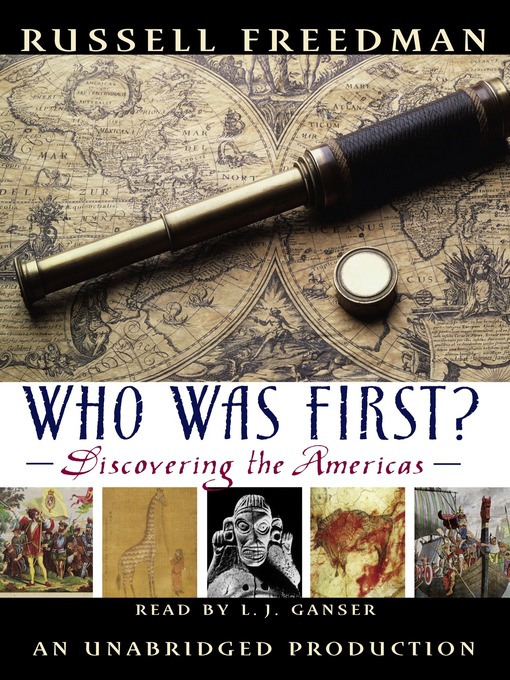
Author: Russell Freedman
Title: Who Was First? Discovering the Americas
Publisher: Clarion Books Date: 2007

Age level: Elementary (3-4)

Summary:
Most people believe that Columbus was the first to arrive in the Americas. That is what we are taught throughout our whole childhood, but was he really the first? What about China, and what about Leif Erickson? Or maybe there were indigenous people who lived here.. This is the story of them all, and who really discovered America.

Strengths:
This book is a great read for elementary school children. It takes a lot of historical information and turns it into a readable book for children. The information is presented in a fun manner, and accompanied by various artworks. The pictures really help break up the text and make the book more exciting. The new approach on the topic is also something children would be interested in, and the book does a great job of explaining the different theories.

Concerns:
Like all informational books, a few sections of the book are bogged down with facts. The overload of information is inevitable in a book like this, and although they usually do a good job at breaking up the tedious parts, sometimes there is a bit too much information.

Classroom use/Other comments:
This is a great addition to a history class period about America. It can be used in a variety of ways, and can really help the children understand. It can be a read aloud, or independent read, or useful in a group project.

Graphic Novel # 5


Author: Aaron Shepard
Title: Master Man: A Tall Tale of Nigeria
Publisher: Harper Collins Date: 2001

Age level: Primary (K-2)

Summary:
Shadusa once thought he was the strongest man in the world, and decided he wanted to be called Master Man. His wife warned him that one day he may meet someone who was stronger, but he did not listen. Shadusa hears of another man who calls himself “Master Man” and vows to go challenge him. When he gets there, however, things change. Maybe Shadusa isn’t the strongest man in the world…

Strengths:
For a graphic novel, this book is very entertaining. It starts off like a simple story, then resembles the tale of Jack and the Beanstalk, and then finishes off with a twist and an explanation for the noise of thunder. It is a very compelling story which would keep many children occupied. There is great detail used in the pictures, and the illustrations really help tell the story. The twist at the end keeps the book interesting, and would most likely prompt a discussion between children who read this book. It is very well done.

Concerns:
The text jumps all over the page, and often times I read it out-of-order. Another thing that bothered me was the fact that one of the women in the book has so many muscles she looks like a man, but the other woman does not. There seems to be a discrepancy when it comes to drawing the different characters, and although these two should be very similarly built, they are not. It just looks a little strange.

Classroom use/Other comments:
This is a great book to read during a folk tale unit, to illustrate how stories from other cultures get passed down and what type of folklore has come out of them. The teacher could talk about the representation of thunder in this book, and have the students come up with their own ideas and creative stories of what the noise of thunder

Friday, March 6, 2009

Graphic Novel # 4


Author: Mark Crilley
Title: Akiko and the Intergalactic Zoo
Publisher: Dell Yearling Date: 2002

Age level: Elementary (3-4)

Summary:
Akiko and all her friends are headed off on a new adventure. This time they are going to the Intergalactic Zoo! What starts out as a normal vacation quickly turns into a scary nightmare. The zookeeper wants to keep Akiko, will she find a way to escape?

Strengths:
Crilley tells the story through the point of view of an upper elementary school girl, and he nails it. The language is great for children and something they can really relate to because it is how they talk and think (mostly). The cast of characters are all unique and quite entertaining. The way everything plays out flows really well and it is a real page turner, especially for the science fiction lovers.

Concerns:
For a graphic novel, it has far too few pictures. It is a great storyline, but it could use a lot more help in the illustration department.

Classroom use/Other comments:
This is a good example of a creative story, and the teacher could use it as an introductory to creative writing. As a starting point, she could have them write an alternate ending, or an additional scene.

Graphic Novel # 3


Author: Scott Morse
Title: Magic Pickle
Publisher: Scholastic Inc Date: 2008

Age level: Primary (K-2) Elementary (3-4)

Summary:
What happens when a science experience goes wrong and produce is accidentally turned into good and evil? Magic pickles happen! Weapon Kosher has been awaken and is trying to round out the bad vegetables before they cause trouble in the city. In the process he makes friends with a young girl, Jo Jo, who has her own problems with a bully at school. Maybe they can help each other at the same time…

Strengths:
The storyline of this book is priceless. It is well thought out and definitely something children would love. The girl is really sassy and the pickle tries to be somewhat of an gentleman. The story weaves together nicely and everything is explained really well. The illustrations in this book are very well done and greatly enhance the story. It is a truly entertaining graphic novel which uses a lot of play-on-words and pokes fun at stereotypes.

Concerns:
The only real concern is that the pickle does not really look that much like a pickle…

Classroom use/Other comments:
This is just a fun book to have around the classroom for children to read when they have free time. It can also be used to talk about safety when conducting science experiments.

Graphic Novel # 2


Author: Shaun Tan
Title: The Arrival
Publisher: Arthur A. Levine Date: 2006

Age level: Elementary (3-4) Upper (5-6)

Summary:
In this wordless graphic novel, you follow the story of a man and his life in a strange new place. Follow his encounters with new people and his new life, waiting for the arrival.

Strengths:
The details of these pictures are so good, even the slight change of color in one of them can signify so much. The pictures really tell a great story. It is a story for anyone from third grade and up, because there is so much you can interpret from it. It can be a simple story, yet it can be made into much, much more. The way that all the elements work together in the book is great and leaves room for so much interpretation- it could be linked to history or to the future. It is very well done.

Concerns:
Most of the story flows from picture to picture, but sometimes there is a jump. You can’t tell if something is happening in the present or if it is a flashback, so it can be a little confusing.

Classroom use/Other comments:
It would be great to have children write their own text to go along with the story. Have them each create their own scenarios of what is happening in the pictures.

Graphic Novel # 1


Author: Satoshi Kitamura
Title: Comic Adventures of Boots
Publisher: Farrar Straus Giroux Date: 2002

Age level: PreK Primary (K-2)

Summary:
Follow Boots on three different adventures with his friends in this funny graphic novel!

Strengths:
The illustrations in this book are great. They are really put together and capture the emotions of Boots and all his friends. The stories are simple and the topics are great for young children. Having three separate short stories breaks it up and makes it a perfect length for the younger children. Not to mention, the stories are highly entertaining.

Concerns:
I have no concerns with this book! It is great for young elementary school children.

Classroom use/Other comments:
This is a good book to show how it is important to illustrate your stories and encourage children to do so with their own. It is also a good book to let children read during free time because the short stories allow them enough time to finish.

Biographies/Informational Book # 4


Author: James Haskins
Title: Bayard Rustin
Publisher: Hyperion Books for Children Date: 1997

Age level: Elementary (3-4) Upper (5-6)

Summary:
This is the biography of Bayard Rustin. It follows his life and details his involvement in the Civil Rights Movement. Not only in his organizing of the March on Washington, but also his work with other great leaders of the time.

Strengths:
This book is a great example of a well written biography for upper elementary school children. It includes enough simple facts and dates to give an accurate background of Rustin, but does not overpower the book with them. Instead, it goes into detail about other important issues and explains what sort of bias and hatred Rustin had to endure for being a gay African American and leader of the March on Washington. The language used is age appropriate and the situations are put into a context that children can understand.

Concerns:
There are some pictures in the center of the book, but only a few. There are probably a lot more out there that could have been interspersed throughout the book. It would help break it out and help kids keep reading.

Classroom use/Other comments:
This is a great book to use when talking about how everyone matters and that behind-the-scenes help often plays a large role in everything. Rustin was not that well known, but he certainly had an influential role, and the teacher can incorporate this into a lesson. It is also a great book to use when talking about the Civil Rights Movement and important leaders.

Thursday, March 5, 2009

Biographies/Informational Books # 3


Author: Mirjam Pressler
Title: Anne Frank: A Hidden Life
Publisher: Dutton’s Children’s Books Date: 1999

Age level: Elementary (3-4) Upper (5-6)

Summary:
This book takes a more in depth look at the diary of Anne Frank. It analyzes some of the lesser known diary entries and talks about the people who were present in her life at the time. It takes a more in depth look at everything that happened, and the smaller details.

Strengths:
This is an excellent addition to Anne Frank: The Diary of a Young Girl. It adds in depth analysis that a lot of students would not normally think about. It explains complicated details in a simple way for children to learn from it. There are some great photographs in the middle of the book which really help show who Anne Frank is, and who all the people in her life are. The combination of diary entries and paraphrasing of the diary provide a lot of change in the story and keep it interesting.

Concerns:
This should not be read just by itself, because it is a little dry sometimes. There is a lot of information that is dissected, and it does not always hold the readers attention.

Classroom use/Other comments:
This is a great supplement to other books about Anne Frank, and a great book to use to teach students how to analyze.

Sci Fi/Fantasy # 4


(Fantasy)
Author: Beverly Cleary
Title: The Mouse and the Motorcycle
Publisher: Avon Books Date: 1965

Age level: Elementary (3-4)

Summary:
Keith and his parents have stopped at an old hotel in California where they will be staying for a few days. A curious mouse lives in the knothole in Keith’s room, and while the family is away he tries to ride Keith’s toy motorcycle. The bike and the mouse, named Ralph, both fall off the desk into the wastepaper basket, where Ralph is sure the end is near. When Keith returns he finds Ralph and befriends him. As the story unfolds, Ralph is destined to many adventures with and without the motorcycle. Is he really ready for that type of responsibility?

Strengths:
This book combines adventure and interaction with animals- two things children love. It is a really entertaining book that is simple to read. There are a lot of concepts that are easy to relate to in this book, and children will learn from it. There are some really great themes throughout the book as well.

Concerns:
At some points, the book drags slightly. It seems that some of the ideas are drawn out too far, and take too long to get through. That may be due in part to my age, I’m sure a young child would not notice.

Classroom use/Other comments:
This is a great book to have in a reading corner, or to allow the students to read during free time. They could create a very interesting book report from it. It could also be used if there is a class pet somewhere in the school (that is a mouse) and to talk about what it would be like if these things could actually happen.

Biographies/Informational Book # 2


Author: Judith St. George
Title: So You Want to Be President?
Publisher: Philomel Books Date: 2000

Age level: Primary (K-2) Elementary (3-4)

Summary:
This is a book all about the first 42 presidents of the United States. It talks about how they were similar, how they were different, and what it takes to be president.

Strengths:
This book does a great job at breaking down complex concepts for elementary school children. It talks a lot about the different attributes of the presidents and different things that happened to them in terms easy enough for a young child to understand. When bad things happened, the author made sure to turn it around by making it into somewhat of a joke (with help of the great illustrations) and reassuring the reader that things are still okay. At first glance, it does not seem like it would be that exciting of a book, but I loved reading it and could not put it down! There is so much to see on each page and so many facts to learn. At the end there is even an appendix which gives a little biographical information on each president. It really is a terrific book.

Concerns:
My only concern with this book is that it is slightly outdated. There needs to be some additions made to the book to make it more accurate!

Classroom use/Other comments:
This book is perfect to use when introducing the different presidents of the United States and talking about roles of government. It would be wonderful to use during any history lesson of any of the presidents- even if you just pick out the pages that that specific president is on.

Biographies/Informational Book # 1


Author: Ann Morris
Title: Families
Publisher: Harper Collins Date: 2000

Age level: PreK Primary (K-2)

Summary:
This book is a description of all different types of families- big and small, together and apart, etc. It talks about all the things families have in common and how at the end of the day it is all about love.

Strengths:
One thing I like about this book is the variety of pictures that are used to illustrate families. It is very multicultural, and at the end of the book there is an index that describes where every family in the book is from and what is going on in the picture. There is also a map which helps children identify where these different countries are. It is simple and to the point, and teaches children about different lifestyles than their own.

Concerns:
The book is slightly boring. There are no fun fonts, or backgrounds. It is simple writing with real photographs of real families. The idea is a good one, but it needs something to spice it up.

Classroom use/Other comments:
This is a great book to teach children all about different types of families and how everyone is different. However, it needs to be a read aloud and a quick one at that. Students are likely to lose interest if this book is dragged out.

Sci Fi/Fantasy # 3


(Science Fiction)
Author: Jonathan Etra and Stephanie Spinner
Title: Aliens for Lunch
Publisher: Random House Date: 1991

Age level: Elementary (3-4)

Summary:
Richard and his friend Henry are enjoying a nice quiet day when all of a sudden out of their popcorn comes a little alien named Aric. Aric needs their help to save earth from the attack of the aliens from planet Threll- and worse, the end of dessert! Can Richard and Henry save the day?
Strengths:
This book does a great job trying to convince children that vegetables serve a purpose in life and that they are better than desserts are. The evil aliens can be defeated by the mere glimpse of a celery stick! However, the book is very compelling and would keep any third grader interested in extra terrestrials very riveted. The names and illustrations are very silly, something that children love.

Concerns:
As far as plot goes, this storyline is pretty simple. There are no extra twists or turns that would surprise a child. It seems very straightforward and almost too short.

Classroom use/Other comments:
This book is good for independent reading and perhaps a good book report!

Sci Fi/Fantasy # 2


(Fantasy)
Author: Faith Ringgold
Title: Aunt Harriet’s Underground Railroad in the Sky
Publisher: Crown Publishers Inc Date: 1992

Age level: Primary (K-2) Elementary (3-4)

Summary:
Cassie and her brother BeBe are flying in the sky when they encounter a mysterious train. BeBe hops onto the train and Cassie is left crying for him. She meets Harriet Tubman who transports her back to the time of slavery and helps her escape from the south to be with her brother again.

Strengths:
This story is rich in history and does a great job of still being exciting. It gives facts without being boring, yet also has a fantastical nature to it. The illustrations match the story perfectly and often show things that the text may not explicitly spell out. They are so colorful and thought out, without being too overwhelming. The story keeps you wanting more and always looking to turn the next page. It truly is a terrific book that all teachers should share with their classes.

Concerns:
The only concern I have with this book is how it jumps from place to place and often times seems to skip over some details. It is a picture book however, so it has to leave some things out. I am just afraid it could confuse some of the younger children.

Classroom use/Other comments:
This book would be a great lead in to a history class on slavery. It is also a great beginning to a lesson on Harriet Tubman and other brave people of her time. At the back of the book there is a history of Harriet Tubman and the real Underground Railroad, which could be easily incorporated into a lesson!

Sci Fi/ Fantasy # 1


(Science Fiction)
Author: Brian Pinkney
Title: Cosmo and the Robot
Publisher: Greenwillow Books Date: 2000

Age level: Primary (K-2)

Summary:
Cosmo lives on Mars with the rest of his family, including his big sister Jewel and his robot friend, Rex. One day Rex breaks and Cosmo is very sad. He thinks life on Mars is lame. Then one day his parents give him a new Solar System Utility Belt which may come in handy on his next adventure…

Strengths:
This book shows an African American family living in space and working on scientific experiments, which is something we do not read about a lot. It brings a new take on space life and living on other planets. The story is relatable to any child who has an older sibling that pushes them around. There is a lot of scientific language used in this book, but it is worked into the rest of the story well. The illustrations are really colorful and really get the emotion that is present in the story.

Concerns:
Some of the scientific language in this book may not be easily understandable for a young child. They will definitely have to read it with a buddy or a teacher.

Classroom use/Other comments:
This would be a great book to use in science when talking about the planets and space. The students would really enjoy listening to this and then learning about Mars and the other planets.

Wednesday, March 4, 2009

Realistic Fiction # 5


Author: Eve Bunting
Title: Fly Away Home
Publisher: Clarion Books Date: 1991

Age level: Primary (K-2) Elementary (3-4)

Summary:
This is a story of a little boy, Andrew, and his dad who are homeless. They live in an airport. It is the story of how they get by from day to day and what Andrew hopes will happen someday.

Strengths:
The story is very well written and can serve as a window into another type of life. A lot of children would not be familiar with this type of situation and it does a good job of explaining how they live. It is very realistic and shows a true survival story. It keeps the reader’s interest the entire time.

Concerns:
This book almost has to be for the older elementary school children because of the subject matter of the story. A lot of young children would not understand what it is like to be homeless or may not be able to grasp the concept. It is a book that does not have a happy ending, which may bother some young children. Also, the pictures are not that warm and inviting, but are meant to look like the harsh reality is. I know this is the point, but it may bother some younger children.

Classroom use/Other comments:
As said before, this is a good story to use as a window into other types of living. It would be a good introduction to teaching children the differences in lifestyles and how everyone is different.

Realistic Fiction # 4


Author: Janet S. Wong
Title: Apple Pie 4th of July
Publisher: Harcourt, Inc Date: 2002

Age level: Primary (K-2)

Summary:
A little Chinese girl is distressed at the fact that her parents keep their store open on the fourth of July in America. No Americans want Chinese food on the fourth of July, do they?

Strengths:
The illustrations in this book show all different kinds of cultural backgrounds, which I really like. It shows the fact that Americans come from all different backgrounds and are all different yet they can all enjoy the same things- in this case, Chinese food! The contrast between the pages with a lot of white space and the full color pages in this book really add to it. It has a great moral of the story and really teaches children.

Concerns:
One concern I have with this book is that the main character gets really sad towards the middle of the book because she fears all hope is lost. In the end she is happy, but it seems for a little while that no good can come out of this book..

Classroom use/Other comments:
This is a great book to use when explaining the fourth of July. It is also a great book to use to talk about Americans and how everyone is different.

Realistic Fiction # 3


Author: Sara Pennypacker
Title: The Talented Clementine
Publisher: Hyperion Books for Children Date: 2007

Age level: Primary (K-2) Elementary (3-4)

Summary:
There is going to be a talent show in which the third and fourth graders will all participate. Clementine does not think she has any talents and is not sure she will find one in time! Follow as the story unfolds her special talent.

Strengths:
This is a great book for a child who is trying to find themselves. Pennypacker does a great job of capturing the spirit of a young child who just does not think they are good at anything and turning it into something positive. There is a little bit of something everyone can relate to in this book. The language used is very appropriate for this age level and the dialogue between Clementine and Margaret is great – very realistic. I really like the use of the word ‘empathetic’ and how after it was introduced it kept being used throughout the story because it was a new word that Clementine had learned.

Concerns:
The parents in this book do not seem to be as helpful or as involved as much as in real life. I know this is a characteristic of realistic fiction, but sometimes the book goes to far as to make it seem like the parents do not even care. It just seems that there could have been a better balance. Also, I do not believe most parents would take their child out shopping if they smelled like beer (even if it was from the situation in the story)!

Classroom use/Other comments:
This could be a great book to read when students are getting ready to showcase their talents, or are going to have to write an about me report. It gives them a lot of examples to choose from and a lot of things to think about that could apply to themselves.

Realistic Fiction # 2


Author: Judy Moody: was in a mood. Not a good mood. A bad mood.
Title: Megan McDonald
Publisher: Candlewick Press Date: 2000

Age level: Elementary (3-4)

Summary:
Judy Moody is starting her first day of third grade and she could not be unhappier. The story follows her through her first month of school, where she constantly tries to get rid of her bad mood, but does not think her life is anything special. At the end of the month and her language arts project, Judy will turn out different than anyone imagined.

Strengths:
The language in this book is phenomenal. McDonald writes just like a third grader would think and write if she were to write it herself. It makes it really easy for a child to relate to it. Also I like the use of some pages as just pictures, which serve as a break up in the book and give the child something to look forward to. The storyline is simple and to the point and there are issues that most children have to deal with in their lives. By the end of the book there are some brilliant themes to be taken away from the reading, and hopefully that will teach children great things.

Concerns:
Some may argue that there is no real point to this book, that Judy’s mood fluctuates throughout the book and nothing really happens. However, this book was made for light reading and not to tell an adventure story. Also, the book does not always give an accurate account of real life situations and things seem to come a little too easily to Judy.

Classroom use/Other comments:
In this book the students have to make About Me Collages, which is something the teacher could have her students do after they finish reading the book. It will show them how they can creatively think of ways to make these collages and where they can get their ideas from.